



What is Amyloidosis?
Amyloidosis is a rare disease that occurs when a substance called amyloid builds up in the body. Amyloidosis can affect organs in people differently. Amyloidosis can for example affect your heart, kidneys, spleen, liver, nervous system and digestive system. Severe form of the disease can even lead to life-threatening conditions such as failure of one or more organs.
There’s no cure for amyloidosis. Treatments are however available that can help manage the symptoms and control the production of amyloid protein which is responsible for the disease.
ADVERTISEMENT
ADVERTISEMENT
Amyloidosis Is Not One Disease
Amyloidosis is a group of disorders rather than a single disease. Different types of amyloidosis are caused by different proteins that misfold and form amyloid deposits.
The two major systemic forms discussed in clinical practice are AL amyloidosis and ATTR amyloidosis.
AL amyloidosis (light-chain amyloidosis) occurs when abnormal plasma cells produce misfolded immunoglobulin light chains that form amyloid deposits. It is a blood-cell disorder and can affect organs such as the heart, kidneys, nerves and gastrointestinal tract.
ATTR amyloidosis (transthyretin amyloidosis) occurs when transthyretin, a protein produced mainly by the liver, forms amyloid deposits. ATTR can be hereditary, caused by a variant in the TTR gene, or wild-type, which occurs without a disease-causing TTR variant and is more common with increasing age.
Other forms include AA amyloidosis, which is associated with chronic inflammatory conditions, and dialysis-related amyloidosis.
Identifying the exact type of amyloidosis is essential because treatments that are appropriate for one type may not work for another.
What is an amyloid?
Amyloid is an abnormal protein deposit formed when certain proteins misfold and aggregate into insoluble fibrils. Different forms of amyloidosis arise from different precursor proteins.
There can be different types of amyloids. For example, in systemic amyloidosis, amyloids may be deposited widely in the body. The deposition of amyloid may be organ-specific such as limited to the pancreas in type 2 diabetes, or to the central nervous system in Alzheimer’s disease, Parkinson’s disease, Huntington disease, etc. The term amyloid is derived from amylo- (starch) + -oid (like) meaning like starch.
Amyloid protein can be deposited in a localized area and may not be harmful or only affect a single tissue of the body that is affecting its function. This form of amyloidosis is called localized amyloidosis. Amyloidosis that affects many tissues in the body is referred to as systemic amyloidosis. The systemic form of the disease can cause serious damages in any organ of the body, mainly the kidneys, heart (called cardiac amyloidosis), and lungs.
Facts about amyloidosis
- Amyloidosis is a rare disease that occurs due to the building up of abnormal protein (called amyloid) in your body tissues and organs.
- Amyloidosis can occur as an isolated disease (in primary amyloidosis) or as a due to some other illness (in secondary amyloidosis).
- Familial amyloidosis is a rare and inherited form of amyloidosis and can cause nerve damage referred to as transthyretin familial amyloid polyneuropathy, or TTR-FAP.
- An affected organ does not function properly leading to the appearance of certain symptoms in patients
- Diagnosis of amyloidosis is done through a biopsy of the affected tissue.
- Medical treatment options for amyloidosis depend on the type of amyloidosis and are aimed to correct organ failure and treat the underlying conditions.
- Primary amyloidosis occurs on its own. Secondary amyloidosis develops as due to another disease or illness such as chronic infections (tuberculosis or osteomyelitis), or chronic inflammatory diseases (such as rheumatoid arthritis, ankylosing spondylitis, and inflammatory bowel disease).
Prevalence of amyloidosis: How common is amyloidosis?
It is estimated that there are about 4000 new cases of AL amyloidosis annually in the United States. The actual incidence may be somewhat higher as a result of under-diagnosis. The incidence is thought to be equal in males and females. However, about 60% of patients referred to amyloid centers or hospitals or doctors are male. AL amyloidosis has been reported in individuals as young in age as 20 years but is mostly diagnosed at an age of about 50-60.
Types of amyloidosis
AL amyloidosis (immunoglobulin light chain amyloidosis) – It is the most common of all forms of amyloidosis. It can affect your heart, kidneys, skin, nerves, spleen, and liver. It was earlier termed as primary amyloidosis.
AL amyloidosis occurs when your bone marrow produces abnormal antibodies that can’t be broken down. These antibodies are then deposited in tissues as amyloids thereby affecting the normal organ function.
AA amyloidosis – AA amyloidosis generally affects the kidneys but may sometimes affect other organs such as the digestive tract, liver, heart etc. It was earlier termed as secondary amyloidosis. It occurs along with chronic infectious or inflammatory diseases.
Hereditary amyloidosis (familial amyloidosis) – It is an inherited problem that generally affects your liver, nerves, heart and kidneys. Several types of gene abnormalities at birth are linked to an increased risk of amyloid disease in children.
Dialysis-related amyloidosis – It develops when proteins in the blood are deposited in joints and tendons. Common symptoms are pain, stiffness and fluid in the joints, and carpal tunnel syndrome. It generally affects people on long-term dialysis.
| Feature | AL amyloidosis | ATTR amyloidosis |
|---|---|---|
| Protein involved | Immunoglobulin light chains | Transthyretin (TTR) |
| Source | Abnormal plasma cells | Mainly liver-produced TTR |
| Main forms | Acquired | Hereditary or wild-type |
| Commonly affected organs | Heart, kidneys, nerves and others | Heart and nerves, depending on type |
| Typical treatment approach | Target abnormal plasma cells | Stabilize or reduce TTR production |
| Is genetic testing relevant? | Usually not for the underlying amyloid protein | Yes, when hereditary ATTR is suspected |
Causes of amyloidosis
A discussed above, amyloidosis is caused by the buildup of amyloid, an abnormal protein. Amyloid is produced in bone marrow and can be deposited in any tissue or organ. The specific cause of amyloid deposition in your body depends on the type of amyloidosis you have.
What are the risk factors of amyloidosis?
It can affect anyone but there are some people who are at higher risk of the disease. Some of the risk factors are:
- Age: AL amyloidosis mostly affects people between ages 60 and 70
- Sex: most cases of AL amyloidosis occur in males
- Chronic infectious or inflammatory disease increases the risk of AA amyloidosis
- Family history
- Dialysis – Dialysis may not sometimes remove large proteins from the blood. Abnormal proteins can build up in blood of a patient who is on dialysis. This will eventually deposit in tissues. Modern dialysis techniques however have reduced the risk of this type of amyloidosis.
Signs and symptoms of amyloidosis
The signs and symptoms of amyloidosis are not generally visible until the condition is advanced. The signs and symptoms of amyloidosis depend on the organs affected by the disease.
Common symptoms of amyloidosis may include such as:
- Swelling mainly on your ankles and legs
- Shortness of breath
- Fatigue
- Weight loss
- Numbness or tingling pain in hands or feet
- Carpal tunnel syndrome – wrist pain
- Enlarged tongue
- Difficulty in swallowing
- Diarrhea – with blood
- Constipation
- Changes in skin such as appearance of bruises, purple patches around the eyes
- Irregular heart beat
- Excessive amounts of protein in the urine (proteinuria)
- Ventricular wall thickening and the development of heart failure
- An enlarged heart (cardiomegaly)
- Irregular heartbeat (arrhythmias)
- Abnormalities of the heart seen on electrocardiograms (for example: low voltage)
You should meet a doctor if you experience any of these signs or symptoms associated with amyloidosis regularly.
Amyloidosis is generally a multisystem disease resulting in a several clinical presentations. A patient with the disease may be referred to several sub-specialists, most commonly a nephrologist, cardiologist or a neurologist.
Diagnosing amyloidosis
Blood tests and urine tests are generally done to find abnormal proteins that could indicate amyloidosis.
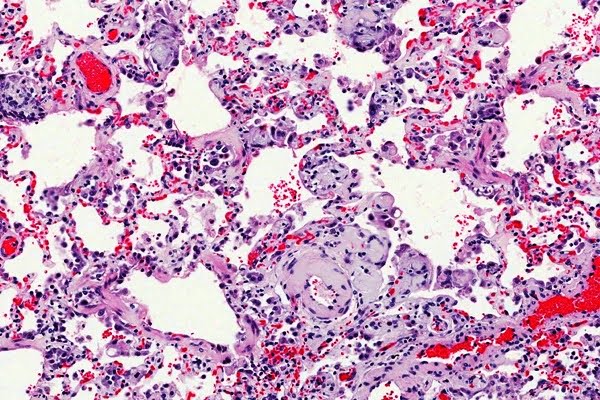
The definite diagnosis of amyloidosis is made by detecting the characteristic amyloid protein in a biopsy sample of the involved tissue. A needle aspiration biopsy of fat just below the skin of the belly is done to diagnose amyloidosis. The procedure is simple and less invasive for the diagnosis of systemic amyloidosis. Pathologists can see these proteins in the biopsy specimen easily when it is coated with a special dye, called Congo red stain.
After the diagnosis is done, different tests may be conducted for the involved organs to know the extent of the disease and the organs affected by it.
Treatment of amyloidosis
There is no single cure for all forms of amyloidosis. However, modern treatments can target the underlying cause or reduce production of the amyloid-forming protein, slow disease progression and manage organ complications. The initial treatment of amyloidosis is aimed to correct organ failure and treat any underlying illness. Treatment depends on the overall health of the patient.
Chemotherapy for AL amyloidosis – Chemotherapy medications that treat multiple myeloma are used in AL amyloidosis treatment to stop the growth of abnormal cells that produce amyloid.
Autologous blood stem cell transplant (ASCT) – It offers an additional treatment option for some patients. It involves collecting your own stem cells from the blood and storing them for a short time while you have high-dose chemotherapy. The stem cells are then returned to your body.
Treatment for AA amyloidosis – Treatments target the underlying condition or disease. For instance, an anti-inflammatory drug is given to treat rheumatoid arthritis.
Hereditary amyloidosis – Liver transplantation may be considered in this type of amyloidosis because the protein that causes this form of amyloidosis is produced in the liver.
Dialysis-related amyloidosis – Treatments include changing your mode of dialysis or doing a kidney transplant.
There is no single treatment that works for all forms of amyloidosis. Treatment depends on the type of amyloid protein involved, the organs affected and the severity of disease.
Modern treatment has moved beyond simply managing symptoms. Some therapies are designed to reduce the production of the abnormal protein, while others stabilize proteins before they can form amyloid deposits.
Treatment for AL Amyloidosis
AL amyloidosis is treated by targeting the abnormal plasma cells responsible for producing the amyloid-forming light chains. Treatment commonly involves combinations of medicines used in plasma-cell disorders, including daratumumab-based therapy.
For selected patients with suitable health and organ function, high-dose chemotherapy followed by an autologous stem cell transplant may be considered.
Treatment for ATTR Amyloidosis
Treatment for ATTR amyloidosis has expanded significantly in recent years.
For ATTR cardiomyopathy, medicines such as tafamidis and acoramidis can help stabilize transthyretin and slow the progression of disease. Gene-silencing therapies such as vutrisiran reduce the production of transthyretin in the liver and are also used for specific ATTR indications.
The choice of treatment depends on whether the disease is hereditary or wild-type, whether the heart or nerves are affected, and the patient’s overall health.
Because treatments and approved indications continue to evolve, people with suspected or confirmed ATTR amyloidosis should be evaluated by a specialist familiar with the condition.
Recent Advances in Amyloidosis Treatment
Treatment options for amyloidosis have changed considerably. In the United States, recent regulatory approvals have expanded options for people with transthyretin amyloidosis affecting the heart.
In 2024, the FDA approved acoramidis (Attruby) for adults with wild-type or hereditary ATTR cardiomyopathy to reduce cardiovascular death and cardiovascular-related hospitalization.
In 2025, the FDA expanded the indication for vutrisiran (Amvuttra) to include adults with wild-type or hereditary ATTR cardiomyopathy, with the goal of reducing cardiovascular mortality, cardiovascular hospitalizations and urgent heart-failure visits.
These developments are important because they reflect a shift toward treatments that target the underlying biology of ATTR amyloidosis rather than treating only the complications caused by amyloid deposits.
When Should Amyloidosis Be Suspected?
Amyloidosis is rare, but doctors may consider it when several otherwise unexplained findings occur together.
Examples include:
- Unexplained thickening of the heart muscle
- Heart failure with preserved ejection fraction, particularly when other findings are unusual
- Persistent protein in the urine or unexplained kidney disease
- Peripheral or autonomic neuropathy
- Bilateral carpal tunnel syndrome, particularly when accompanied by other suggestive findings
- Unexplained enlargement of the tongue
- Easy bruising or purplish discoloration around the eyes in some forms of AL amyloidosis
- A family history of hereditary amyloidosis
- A combination of heart and nerve problems without an obvious explanation
These findings do not mean that a person has amyloidosis. They may have many other causes. The significance is greater when several features occur together or when routine explanations do not adequately account for the symptoms.
Related Reads
Latest Posts




ADVERTISEMENT